Full hydro steering, unequal length tie rods causing major handling problems?

Hardline Crawlers - Rock Bouncer Builds, Tech & Off-Road Trail Talk

Help Support Hardline Crawlers:

urbex

Member
Joined
Jan 31, 2022
Messages
18
Reaction score
5
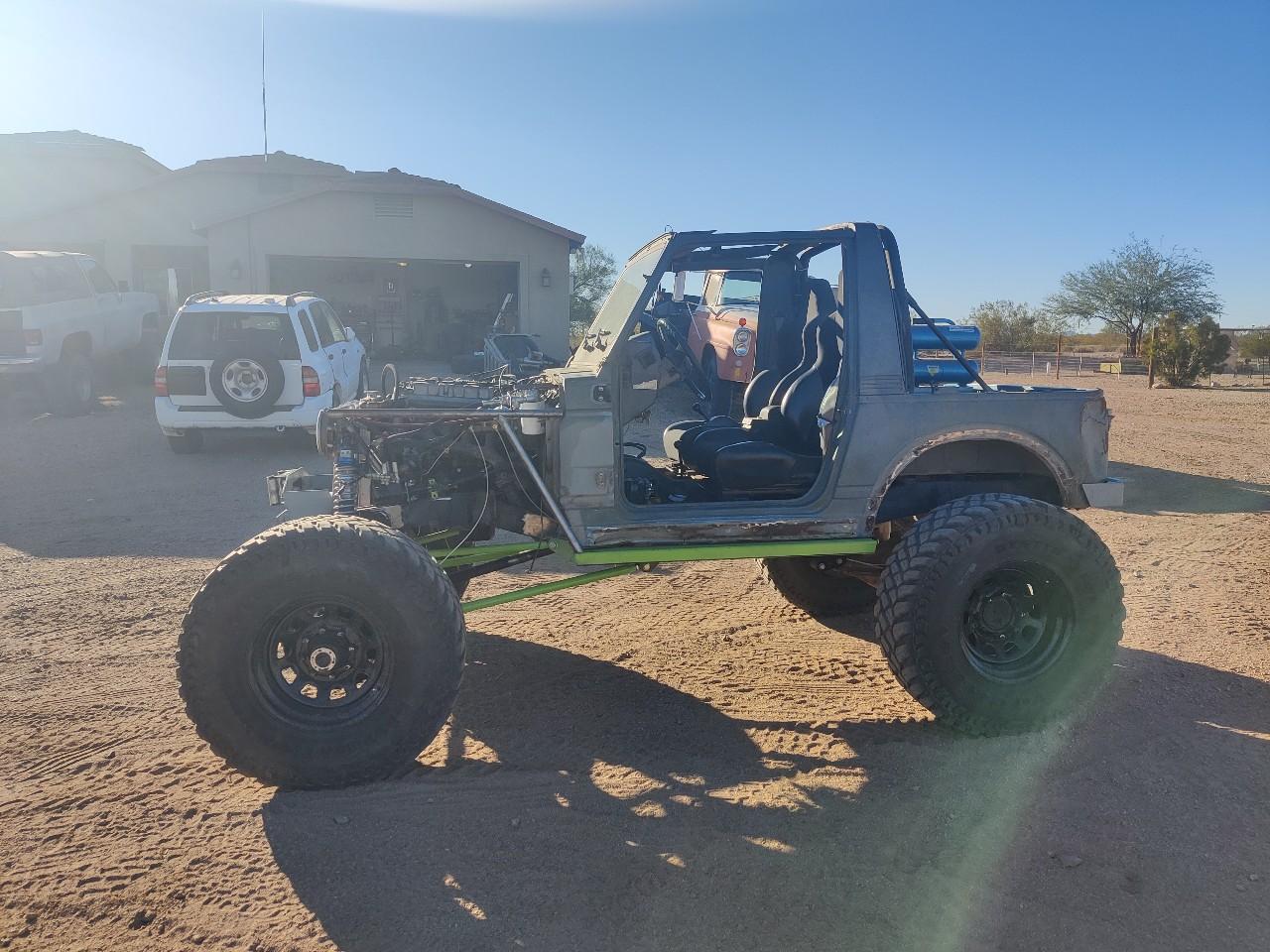
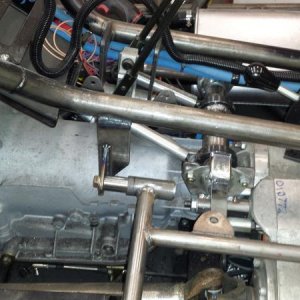
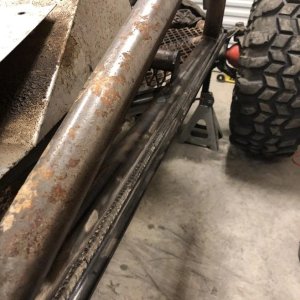
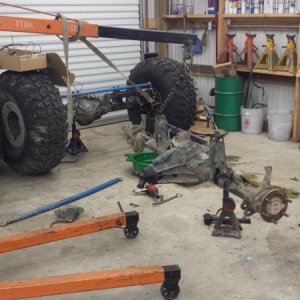
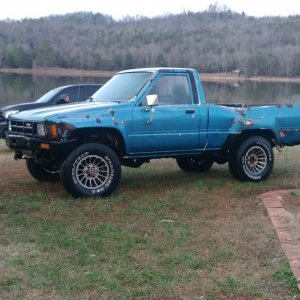
Been working on a Samurai with a low budget full hydro steering set up. Chevy full width 10b axle, currently open differentials front and rear, Fox 2x12 coilovers, 2x8 double ended Surplus center ram, non load reaction steering valve, stock Vitara 2.0L pump, running to factory steering arms on the knuckles where the tie rod used to be. Set up this way for both budget and clearance reasons. Tried to avoid the expense of going high steer, and I have set up the Sammy to be low COG, so packaging the cylinder low worked out better.

I bored the factory TRE holes on my mill to be a nearly precision fit with the bolts holding the heim joints on to minimize slop in the event those bolts ever come loose. Due to the low height, I have the steering cylinder WAY offset to clear the pumpkin...which I _think_ is now causing the big problem of it feeling like it has extreme bump steer.

This thing is anything but stable at any speed above 25mph or so. Steers fine at crawling speeds, but once I get it up to any kind of speed on the road, it's all over the place, whether on pavement or on dirt. It reacts like the front end is set up with WAY too much toe out, and the tiniest bit of steering input makes the front end jump all over, as if it has wicked bump steer. It's next to impossible to keep it in a straight line. I built it with the intention of it being a trailer queen, and have zero desire to take it down the freeway, but doing 10mph down the access roads to the trails from the trailer parking area is gonna suck too.

Cylinder is positioned fore/aft to have everything in a straight line with steering full left/right. I currently have an 11" difference in tie rod length due to the cylinder offset. Center to center of the heims - 19" passenger side, 8" driver side. I _think_ this is causing major toe changes as the steering is cycled, causing my problem? I've been doing a ton of reading and searching, and have seen various posts from people across various forums where people are saying offset cylinders "works fine", but never any details about how much offset, if/when too much is too much, or if it's strictly on crawlers that never come out of 4LO.

I have spent hours playing with alignment numbers, and have gone from 0* through 10* caster, 1/4" toe out through 1/4" toe in..not one big jump, those are just the extremes..I have dialed in a bunch of different numbers in between trying to solve this. Currently settled on 7* caster, 1/16" toe in as the best compromise, but it's still not anything I'd want to run much past 15mph or so.

So now before I tear out my current cylinder mount, I'm hoping can at least say that I'm on the right track, or way off, on my thinking that my cylinder needs to be more centered up..maybe I'm going to be forced into high steer on this?
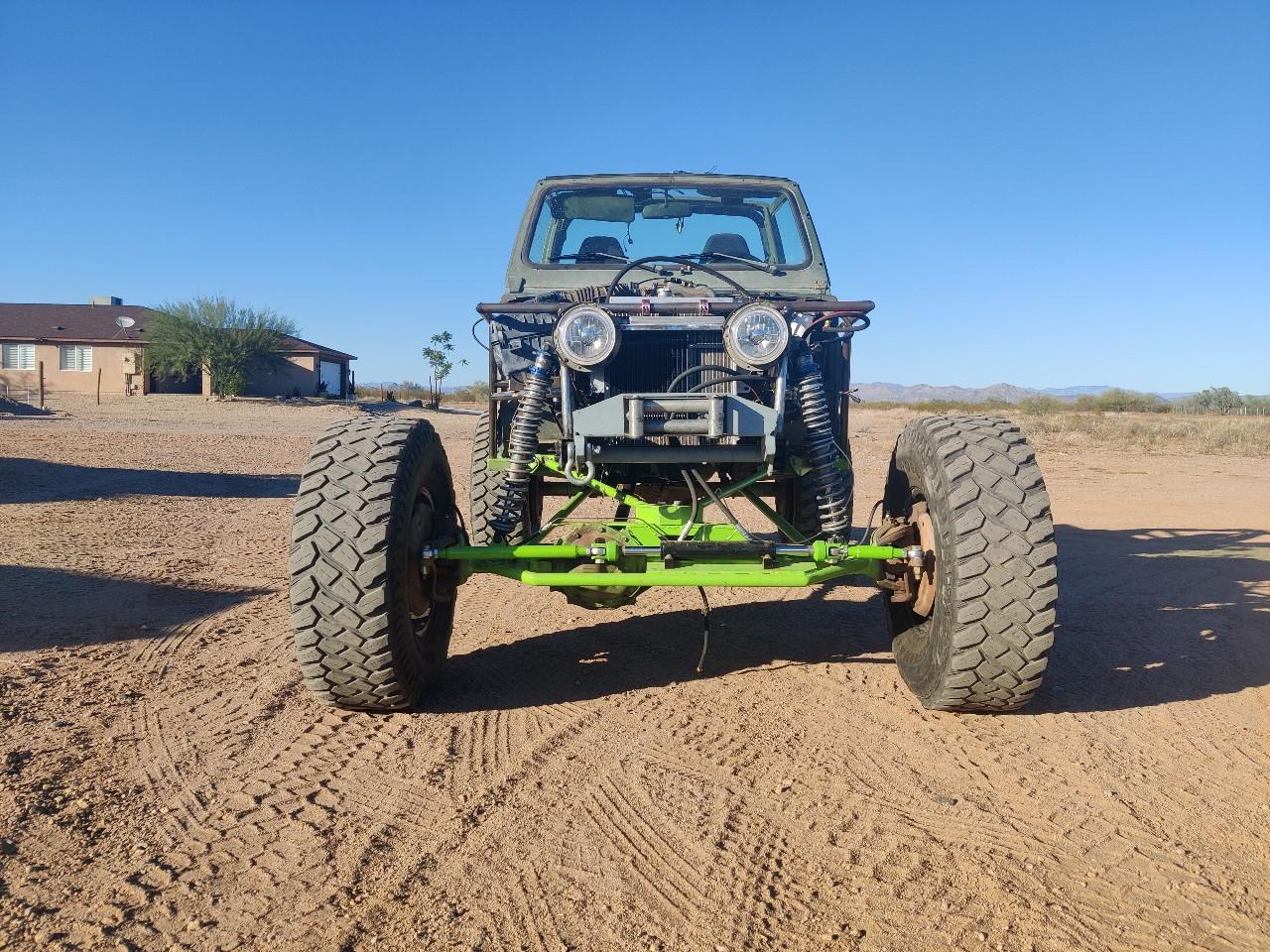
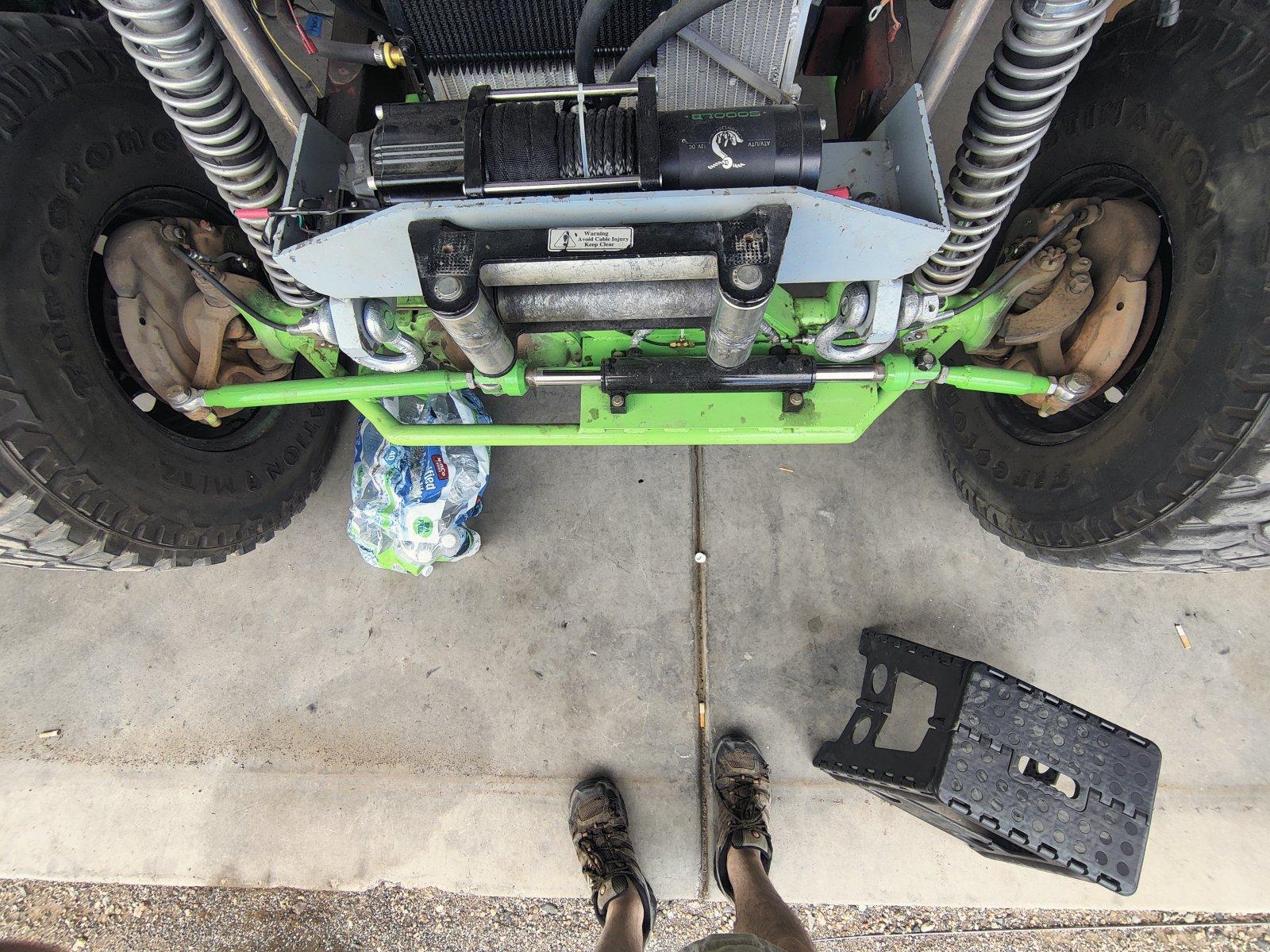
IMG_20211029_155614_copy_1280x960.jpg


IMG_20220129_132956.jpg


IMG_20211029_155512_copy_1280x960.jpg
 
Last edited:
It wouldn't be called bumpsteer since it's full hydro, but I agree that an offset ram has an impact on steering geometry. Mine is offset 1" and I can feel the difference. Some people say it's fine with more offset, but I don't. Maybe I'm too picky?

Could you give us some more info on your hydro setup ? Ram size, orbital volume etc ?

Pics of your vehicle / setup ?
 
are you measuring toe in at the tires? what size tires?

If you're running something like 37-40s, try running 3/4-1" toe in.

Toe in is angle. 1/4" toe in on a 40" tire is a lot less toe than 1/4" on a 28" street tire.

My last build was set up similar, I think one tie rod was like 5" long.

Pics?
 
Added pics to 1st post...man, you guys are QUICK on the replies :D I tried to get all the pertinent details on the first post, and I guess maybe I just buried them instead, lol. I hate being the guy that looks like I tried to fix something for about 10 seconds, then expected to be hand held through the rest.

I realize it's not true bump steer, I just couldn't think of a better way to describe it in words.

Anyways, tires - 37x12.50R17, measuring toe at the wheel lip. Figured that was the best place to go for accurate, repeatable measurements, as the wheels are brand new for this, and haven't been chewed up on the rocks yet.

Steering hardware - I'm gonna have to go digging for notes again, but I'm pretty sure the orbital is a 6.1ci/rev. Char-lynn valve, non load reaction, power beyond. PB port is tee'ed into the return before the filter (found out the hard way that Billavista's hydro steering bible was wrong on that one, after burning up a pump..PB can NOT be just plugged off). 2x8 Surplus Center doubled ended ram. Heims for inner and outer. Factory Suzuki PS pump from the same '02 Vitara I took the motor from. It worked out to be roughly 2.5 turns lock to lock.

Ram is currently at 6" off center. I can easily get it down to 4" off center right now by just redrilling some holes in the mounting plate.
 
There are some issues with setting up a ram in an offset configuration but I would not expect them to show up in straight line driving. They will show up in full lock to lock steering because the angles of the links are so different at the knuckle which causes them to move unevenly. In straight line driving that is negated as the links and ram are acting as one unit for what little bit of movement you have in back and forth correction. My rig did this and i found that one of the ram ends had come loose and changed my toe in angle to a severe toe out angle. In your case it sounds like you might have something loose (play in the heims) that shows up when you start going down the road. Try setting your tow in at like 3/8 as tbltoy suggested and see if it improves.
 
Could the pb be putting pressure back on the return side to the ram and causing issues. I thought that the pb had to go directly to the resi ?
 
As an Amazon Associate we earn from qualifying purchases. Product prices and availability are accurate as of the date/time indicated and are subject to change.
Could the pb be putting pressure back on the return side to the ram and causing issues. I thought that the pb had to go directly to the resi ?

It's my understanding that the return/tank port on the orbital is blocked unless steering input is put on it from the steering wheel, and all exhaust fluid runs through the PB port. Then likewise, when steering is occuring, the PB port is blocked, and the tank port becomes the exhaust. At least in my head, it seems like even if it was back feeding pressure like that, it would be feeding pressure on both sides of the ram, more or less cancelling it out anyways?

Though I'm not any kind of hydraulics expert, and never really dealt with it outside of the simple system that runs the loader on my tractor. I only learned this after initially just plugging the PB port on the valve ('cause the Bible said I could, lol) then had an issue with the pump dead heading.

Though I had also wondered if using a PB valve without actually using the PB function might be causing other issues, such as maybe a bit of a delayed response in the steering while the pressure/exhaust valves get shuttled back and forth internally, causing me to basically be in a constant state of overcorrection on the steering? I've considered buying a different non PB valve to try, but I really dislike just throwing parts at a problem and hoping it gets fixed without an understanding of why. Especially when those parts are a few hundred bucks, lol.

It's not something dumb like your wheel bearings or balljoints are shot?

I sure hope not! Though I'd rather find it was something that stupid simple than have to reengineer the whole system, lol. I drove the truck the axles came out of for a while without an issue, and I've been all over the front after putting it in the Sammy checking for slop in the bearings and heims several times. One of the wheel bearings did have a tiny bit of play in them at first that I tightened up.

I'll get in there and dial some more toe in to it this weekend and see what happens.
 
If you would be so kind as to keep us updated it would be appreciated. Never know when the info may help fix one of our POS.
 
Is there a reason you ran with the 5 port? I doubt it's something in your setup looks good to me. I've always had good luck with an 4 port open center/ non load sensing orbital.
 
If you would be so kind as to keep us updated it would be appreciated. Never know when the info may help fix one of our POS.
Always try to!

Is there a reason you ran with the 5 port? I doubt it's something in your setup looks good to me. I've always had good luck with an 4 port open center/ non load sensing orbital.

Because I got a new valve for $50 from a shop that went out of business. At the time, it seemed like a add a $2 plug to the 5th port, as according to the Billavista hydraulic steering bible it could be plugged off, and it would result in a 2.5 turn lock to lock set up...it would be a no brainer. After frying that 1st pump due to that plug, I began to suspect that my cheap valve may not have been the best plan after all, lol.

I've been thinking about replacing it with a 4 port, but again, not really into the throw parts at it based on a guess and a prayer thing. If I do end up having to replace something, or all of it, I'm not against the idea..I just don't want to do it randomly.
 
I’d bet it’s something with the orbital. You can get a used one off eBay for 125 bucks.
 
Always try to!


Because I got a new valve for $50 from a shop that went out of business. At the time, it seemed like a add a $2 plug to the 5th port, as according to the Billavista hydraulic steering bible it could be plugged off, and it would result in a 2.5 turn lock to lock set up...it would be a no brainer. After frying that 1st pump due to that plug, I began to suspect that my cheap valve may not have been the best plan after all, lol.

I've been thinking about replacing it with a 4 port, but again, not really into the throw parts at it based on a guess and a prayer thing. If I do end up having to replace something, or all of it, I'm not against the idea..I just don't want to do it randomly.
The valve maybe worth looking into . I had a buddy that blocked the port off too. His put massive amounts of heat and his steering would try to lock up at anything above 20 mph . I think he had just a regular Saginaw pump too .
 
The valve maybe worth looking into . I had a buddy that blocked the port off too. His put massive amounts of heat and his steering would try to lock up at anything above 20 mph . I think he had just a regular Saginaw pump too .

It was immediately obvious that I had a problem right from the get go on that one..had an insane amount of steering power right at idle, but lost _all_ power assist after about 1200rpm. It was like the pump didn't even exist. Back to idle, and it worked again. But it took about 30 seconds before the fluid started boiling out of the reservoir. Didn't even make it out of the garage on that pump. But it never whined or anything like that that you would expect a pump stuck on bypass would be doing, so it didn't immediately click in my head what was going on with it.

Replaced the pump, took the plug out of the PB port, and tee'd in with the tank return line, seems to work fine. Never any hint of lack of power, locking up, or anything weird like that. Even at speed when the front end is jumping around, I never lose steering, I just can't get it to go straight again until I slow back down. Kind of like bad death wobble - doesn't settle down until you slow down too.

That said, if I can conclusively point to the valve as being a problem now, I don't have a problem replacing it. I'd rather just buy a new one, rather than take a chance on buying someone else's problem child too. Though I'd probably crack this one open first to see if there's any evidence of burnt seals or similar.

what's the part number of your orbital?

Char-Lynn 291-5012-001
 
It was immediately obvious that I had a problem right from the get go on that one..had an insane amount of steering power right at idle, but lost _all_ power assist after about 1200rpm. It was like the pump didn't even exist. Back to idle, and it worked again. But it took about 30 seconds before the fluid started boiling out of the reservoir. Didn't even make it out of the garage on that pump. But it never whined or anything like that that you would expect a pump stuck on bypass would be doing, so it didn't immediately click in my head what was going on with it.

Replaced the pump, took the plug out of the PB port, and tee'd in with the tank return line, seems to work fine. Never any hint of lack of power, locking up, or anything weird like that. Even at speed when the front end is jumping around, I never lose steering, I just can't get it to go straight again until I slow back down. Kind of like bad death wobble - doesn't settle down until you slow down too.

That said, if I can conclusively point to the valve as being a problem now, I don't have a problem replacing it. I'd rather just buy a new one, rather than take a chance on buying someone else's problem child too. Though I'd probably crack this one open first to see if there's any evidence of burnt seals or similar.


Char-Lynn 291-5012-001
Im sure youve checked steering tow in but that sounds exactly like what you are describing. It would also be worth checking your wheelbase on both sides as well to make sure they match . Its possible at higher speeds if you have a link bar thats out of adjustment it would do some weird tracking as well.
 
Im sure youve checked steering tow in but that sounds exactly like what you are describing. It would also be worth checking your wheelbase on both sides as well to make sure they match . Its possible at higher speeds if you have a link bar thats out of adjustment it would do some weird tracking as well.
As I mentioned in the first post, I've been playing with a bunch of toe settings, going from 1/4" out to 1/4" in, and eventually settled on 1/16" in as the most stable, but that's not really saying much. I think I initially started with 1/4" in, and problems were obvious by 20mph or so. Played with a bunch of adjustment after, and the 1/16" got me up to around 25-30mph before the issues started...so "better", but still not really driveable.

I was actually thinking about the wheelbase left/right match earlier..I didn't mess with the lower links after I initially set it up, but I'm not discounting the possibility that I might have mismeasured or adjusted it later and forgot...or..something. At this point, the only thing I'm positive of is "something ain't right", lol.

I'm planning on basically rechecking everything this weekend - toe, caster, camber, wheelbase, ride height left/right & axle centering left/right. I'm 99.9% positive I had the axle centered, but every time I look at the photo above, I feel like I'm seeing more angle on the passenger side coilover compared to the driver's side, and now it's bugging me. I made jigs for the upper and lower coilover mounts to ensure they went in identically left/right on the frame and axle tubes, but I'm checking that again too.

I'm also planning on making up a couple alignment bars to bolt to the hubs, to try and get a more accurate measurement than the string and ruler method I've been using (stretching a string across two stands parallel with the rear axle on either side, then measuring the front wheels for toe off that string)
 
Char-Lynn 291-5012-001

Non load reactive.
If you don't touch the orbital, it shouldn't move the ram at all.

If you don't touch the wheel, you could "theoretically" drive it in a straight line at 100mph without anything moving in the hydraulic system.

If the driving experience is sketchy without steering input, it's not the hydraulic system.

Outside of this, I have no idea. I don't like the ram being offset so much but can't prove this is the reason.
 
No tech to add, but I’ve got my DE ram offset probably 6” and run only 2-3* caster and mine runs fine up to 50 mph. It’s a little twitchy but I attribute it to being a fast orbital and crappy tires for that speed.

Wish I had more help to offer, but I don’t think the offset ram is the culprit here.
 
The power beyond port is just a "return" port - when you're not steering, it is the main return port.

When you are steering, the flow coming back from the ram goes out the T port.

There should be no issue with having them tee'd together. (unless there is a restriction in your return line or something causing backpressure... Did your burned up pump fill the filter with metal?)
 
If you don't touch the wheel, you could "theoretically" drive it in a straight line at 100mph without anything moving in the hydraulic system.

Which would be great, if every road out there was dead flat, straight, and level, lol. The non load reactive was a plus for me, as one of my primary reasons for wanting to go to some level of power steering was to restrain a rock hit from ripping the steering wheel out of my hands, which was brutal on the stock Samurai steering. I figured going non load reactive was the full extreme on the other end, which was perfect, and worst case scenario it would just require a bit more attention to steering off trail.

No tech to add, but I’ve got my DE ram offset probably 6” and run only 2-3* caster and mine runs fine up to 50 mph. It’s a little twitchy but I attribute it to being a fast orbital and crappy tires for that speed.

Wish I had more help to offer, but I don’t think the offset ram is the culprit here.

Knowing other people have successfully run something that offset without major issue is actually a big help in narrowing down where exactly the problem lies. I figured I'd be a bit twitchy too being a 2.5 turns lock to lock setup, just not nearly this bad, lol.

As I've mentioned before, this is all new stuff to me, so I'm facing a bunch of unknowns. I realize changing so much at once (axles, suspension and steering all at the same time) isn't great for troubleshooting purposes, but then it also seems silly to attempt to get mechanical steering to work on a 4 link like this knowing it wasn't going to be the final setup anyways.
The power beyond port is just a "return" port - when you're not steering, it is the main return port.

When you are steering, the flow coming back from the ram goes out the T port.

There should be no issue with having them tee'd together. (unless there is a restriction in your return line or something causing backpressure... Did your burned up pump fill the filter with metal?)

Doesn't appear to be a clogged filter, I don't feel like it's losing the power part of the power steering at all, system bleeds out quick, and I can see a healthy flow of fluid going through the reservoir at idle. It seemed more like I just had the pressure safety valve lock in full bypass on the old pump rather than a metal failure, but I never cracked it open to verify either. I just grabbed another off a parts car, slapped it in, and kept going.

Regardless, probably wouldn't hurt to pick up a new filter from Napa either just to play it safe.
 
Knowing other people have successfully run something that offset without major issue is actually a big help in narrowing down where exactly the problem lies. I figured I'd be a bit twitchy too being a 2.5 turns lock to lock setup, just not nearly this bad, lol.

My rig is 2.6 turns lock to lock and I had it at 80 ish MPH and it was totally controllable.
 
Ended up getting called into work today, so didn't have a bunch of time to play in the garage. I didn't have the steel I thought I did to make the alignment bars, so I just said screw it, screwed the tie rods all the way in on both sides and ended up with obvious toe in without measuring it.

That made it better...

Then I verified wheelbase left/right, and that was good. Found that, just as I suspected earlier, the axle was off center left/right about 3/4", and fixed that. Put more caster in, and that made it better.

Something told me to check coilover pressure, and oops, apparently I forgot to charge them after putting this all together. Putting 200psi of nitrogen in made a hell of a good difference there, lol

Unfortunetly, it also jacked the ride height up considerably. I built the front end for 4" up/8" down, and how I'm exactly the opposite - 8" shaft showing. I had initially guessed on what my final corner weights were going to be, and apparently I guessed way high, though based on this, I'm currently running approx 250lbs unsprung weight, which seems really low, even given that it's on a Samurai chassis.

I'm set up now on 95/175 springs, and based on the charts, I should be running more like a 70/100. Though I want to finish getting all the tube up front, winch back in, etc before deciding that.

So it's night and day better than it was, but still not quite all the way there.... Obviously, I still need to get in there and actually measure what I have for toe and caster. But could being way oversprung in the front contribute to this as well?
 
could being way oversprung in the front contribute to this as well?
It could play a factor. Much like a vehicle whose struts are worn out or a spring is broken. I am curious though why your ride height changed with a nitrogen charge. You are running coilovers, the springs carry the weight, the rest is just a shock, it dampens the movement but does not carry the weight of the vehicle like a strut does. I can see different pressures giving you fits as the damping effect would be way off from side to side.
 
It could play a factor. Much like a vehicle whose struts are worn out or a spring is broken. I am curious though why your ride height changed with a nitrogen charge. You are running coilovers, the springs carry the weight, the rest is just a shock, it dampens the movement but does not carry the weight of the vehicle like a strut does. I can see different pressures giving you fits as the damping effect would be way off from side to side.

Hmmmm nope.
The nitrogen absolutely carries some of the weight.

The shock shaft acts exactly like a hydraulic ram. Nitrogen pressure x surface area = force.
At 200PSI, a 7/8" OD shaft carries about 120lbs.

Since you fill the shocks at 200 PSI at full droop, when you're at ride height, the nitrogen pressure is even higher, thus driving the force from the shaft higher.
 
The nitrogen gas is there to keep a consistent pressure on the shock oil. This helps prevent cavitation and aeration, which happen when shock oil essentially boils in the low pressure areas of the piston during compression and rebound, which releases gases into the oil. Nitrogen is used because it's still compressible like air, but is more consistent when temperature changes. If you keep enough pressure on a fluid, you can prevent it from boiling and becoming a gas, much like how the water in your engine doesn't boil because it's under pressure. A majority of the time when you feel your non-pressurized shocks fade or act like there is a space of nothing, it's because of cavitation and aeration which makes the oil an inconsistent fluid. So the pressure from the nitrogen and dividing piston prevents the foaming you see happen in non-pressurized shocks.

I respectfully disagree. the above quote is from one of the engineers at King Shocks. The nitrogen does not carry load in a coilover, not to be confused with an airshock or strut like an ORI where it does do the work in conjuction with the oil etc.
 
Every day I'm learning more and more about this stuff...I do seem to recall that I couldn't compress the shock body when it was charged without springs before. I just went out and grabbed one of the spares, and did a quick test with it, without springs installed. Empty, it's easy to compress the full stroke. Charged to 100psi, closed off the nitrogen cylinder, but left the hose and gauge attached, with the fill adapter holding the fill valve open.

Pushed down on the shock, and watched the pressure go up to roughly 150psi. It was fairly difficult to compress, and I couldn't get the full 12" of stroke out of it. Got maybe to 8" or so. Charged it to 200psi, and now I can't get more than about an inch of compression out of it just with my body weight.

I'm not claiming one way or the other, but it at least appears that the nitrogen charge is supporting some of the weight. Maybe it's just a lot more obvious on my overgrown featherweight go-kart of a rig than on the more typical 5,000lb+ rigs?

Went back and forth in my head a lot last night, and decided my wisest choice at this point is to finish building out the front tube work, cage, etc before making a spring swap out, as I'm still really just guessing on what my final chassis weight is going to be. I don't _think_ it's going to go up more than a few hundred pounds at this point, but I figure it's not like I'm gonna be running trails until I finish it all out anyways, so I might as well wait to pick up more springs.

But it's at least close enough on the alignment side of things that I feel fairly confident that I'm not going to have to make major chassis/suspension changes, so I can keep moving forward on it now.
 
I respectfully disagree. the above quote is from one of the engineers at King Shocks. The nitrogen does not carry load in a coilover, not to be confused with an airshock or strut like an ORI where it does do the work in conjuction with the oil etc.
IDK what to tell you man...

Come down to my shop, I'll give you a bottle of nitrogen and let you play with shocks in real life so you can draw your own conclusions.

Went back and forth in my head a lot last night, and decided my wisest choice at this point is to finish building out the front tube work, cage, etc before making a spring swap out, as I'm still really just guessing on what my final chassis weight is going to be. I don't _think_ it's going to go up more than a few hundred pounds at this point, but I figure it's not like I'm gonna be running trails until I finish it all out anyways, so I might as well wait to pick up more springs.

Smart.
But 95/175 is still a heavy rate for a samurai. Even if it has a cage.
 
Back
Top